

Rottweiler family safety depends on everyday management as well as training. A dog who understands basic cues still needs supervision, comfortable resting space and protection from situations they cannot handle. No breed, training course or friendly history guarantees that a dog will never bite.
Instead of expecting a Rottweiler to protect the household, concentrate on helping the dog live comfortably within it. Clear routines and thoughtful introductions give everyone a better chance of getting along.
Make Supervision an Active Job

When young children and a dog are together, an adult should be watching closely enough to intervene. Being elsewhere in the house is not the same as supervising. If your attention is needed for cooking, a phone call or another task, separate the dog and child safely.
Teach children not to climb on a dog, pull ears, disturb sleep or approach food and chews. Adults must manage the situation rather than expecting a child to read every warning sign correctly. Even gentle play can become too rough around a large dog.
Give Your Dog a Retreat
Provide a resting place where nobody follows or bothers the dog. Use appropriate barriers when necessary and make the area comfortable, not a punishment. A dog should be able to rest without constant interaction.
If using a crate, introduce it gradually. Our crate-training guide focuses on comfort rather than forcing a distressed dog to stay inside. A crate does not replace walks, toilet opportunities or companionship.
Teach Skills That Help in Real Life
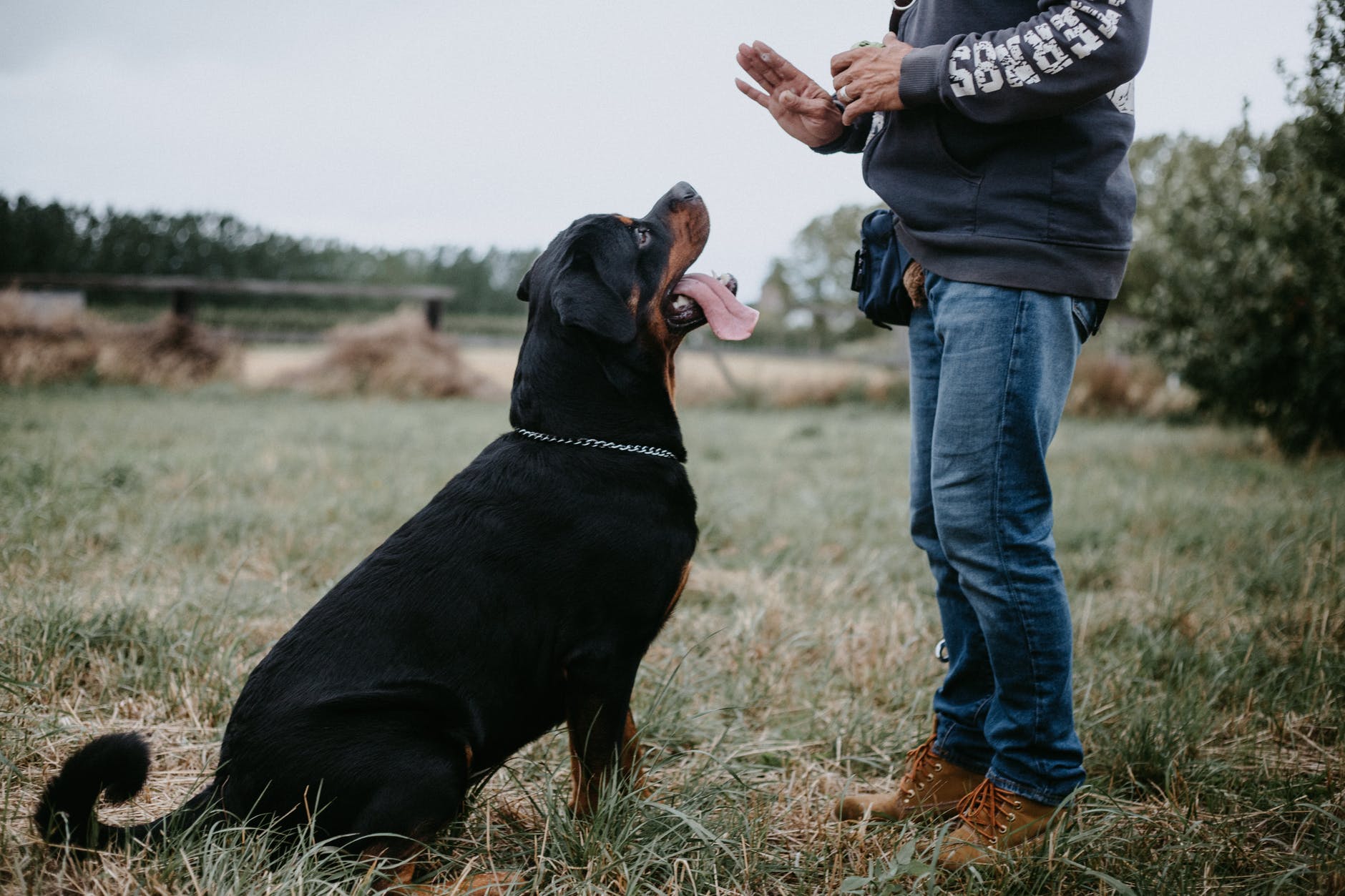
Practice coming when called, moving to a mat, leaving an item and waiting at doors. Begin in quiet surroundings and reward success before adding distractions. A reliable routine is more useful than repeatedly shouting a cue the dog has not learned.
Use reward-based methods and arrange the environment to prevent unwanted behavior. The American Veterinary Society of Animal Behavior recommends reward-based training. Intimidation is not a necessary part of living with a powerful dog.
Our home-training guide gives practical ways to build short lessons into the day. Training supports safety, but it should never be used as a reason to leave a risky interaction unmanaged.
Manage Food, Toys and Visitors
Let your dog eat undisturbed. Do not repeatedly take food or valued objects away to prove control. If guarding occurs, create distance and seek professional advice rather than testing how much the dog will tolerate.
For visitors, use space and barriers if needed. There is no requirement for the dog to greet everyone at the door. Ask guests to avoid crowding or reaching over a hesitant dog. A quiet introduction at the dog’s pace is preferable to a forced greeting.
Notice Discomfort Early
Pay attention to changes such as freezing, turning away, moving out of reach or growling. Consider the whole situation rather than relying on one signal. Stop the interaction and allow space when the dog seems uncomfortable.
Do not punish a growl and continue the same interaction. The underlying discomfort still needs attention. Sudden behavior changes, pain during handling or repeated threatening behavior warrant veterinary assessment and qualified behavior support.
Support Everyday Well-Being
Provide suitable activity, rest, veterinary care and a balanced diet appropriate to life stage. A Rottweiler does not need an arbitrary protein percentage or supplements simply because the breed is large. Ask your vet about individual feeding needs instead of following a universal recipe.
Review your routines as children grow, visitors change and the dog ages. The practical goal is not a dog who tolerates everything. It is a household that respects boundaries, responds to discomfort and makes safe choices before trouble starts.