
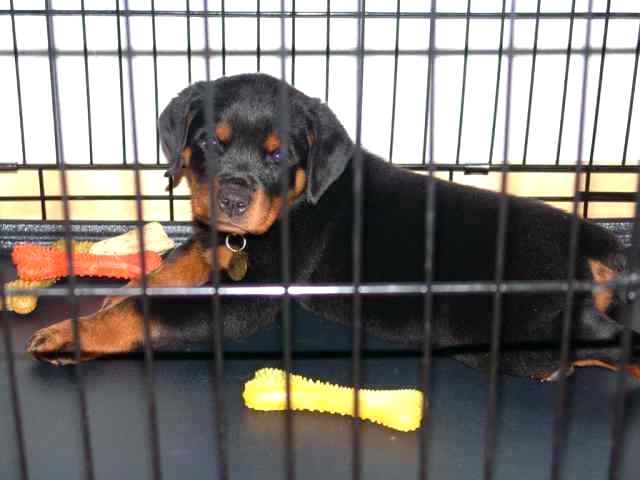
Crate training your Rottweiler means helping your dog feel comfortable in a resting space. It does not mean closing the door for two hours on the first attempt and ignoring distress. Progress should follow your dog’s comfort, not a fixed deadline.
Some dogs adapt readily; others need more support or a different arrangement. A crate is a tool, not an essential test of obedience or a replacement for company, exercise and toilet opportunities.
Choose a Suitable Space
Use a crate that lets your dog stand, turn and lie comfortably. Check its condition and place it somewhere with a comfortable temperature, away from hazards and constant disturbance. Consider how a growing puppy’s needs will change.
Bedding should suit your dog. Do not automatically add pillows or loose materials if your dog tears up or swallows them. Check the manufacturer’s instructions and remove snagging hazards. Keep the setup simple enough to inspect and clean.
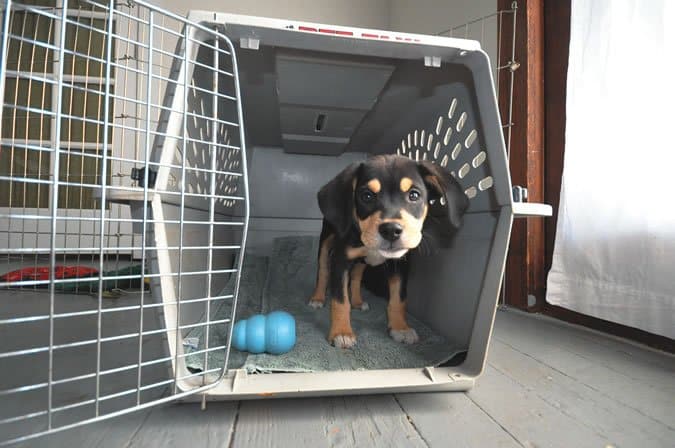
Begin With the Door Open
Let your dog investigate without being pushed inside. Reward a comfortable approach, then voluntary entry. You can place a little food near the entrance and gradually farther inside, but avoid using food to lure the dog into a situation they cannot cope with.
Let them leave. A dog that enters twice is not necessarily ready for a closed door or an absence. The RSPCA’s crate-training guide recommends gradual stages and watching for signs that the pace is too fast.
Introduce Closure in Small Steps
Once your dog is relaxed inside, introduce a very brief door closure while you remain nearby. Open it again before the exercise becomes difficult. Repeat comfortable steps rather than aiming for a large jump in duration.
Build time and distance separately. Standing up, moving away and leaving the room are different challenges from sitting beside the crate. If your dog becomes distressed, shorten or simplify the next practice rather than making them endure it.
Our home-training guide explains how to use small, repeatable successes. Record what went comfortably so you are not guessing at the next step.
Respond to Needs, Not Just Noise
Whining can have different causes. Consider whether your dog needs a toilet break, is uncomfortable or has become afraid. Do not assume every vocalization is manipulation, and do not leave a panicking dog to struggle or risk injury.
If distress persists, stop using the crate as your only management option and seek qualified help. AKC guidance discusses a larger, dog-proofed area as an alternative for anxious dogs. The area still needs to be safe for the individual dog.
Fit Practice Into a Full Daily Routine
Plan toilet breaks, meals, activity and rest around your dog’s age and needs. A puppy cannot be expected to follow an adult’s schedule. Never use confinement to avoid providing care or as punishment after an accident.
Keep family expectations consistent. Children should leave a resting dog alone, and nobody should use the crate for teasing or unwanted handling. Comfort depends on what happens around the space as well as inside it.
UC Davis emphasizes time and patience in crate training. There is no guaranteed finish date. Being comfortable for a short supervised period does not establish readiness for a long absence.
Treat Car Travel as a Separate Skill
Resting in a household crate does not automatically prepare your dog for a moving vehicle. Check travel equipment and practice journeys separately. Our road-trip safety guide covers that setup.
The useful outcome is a dog who can rest comfortably when needed. If your plan is producing fear instead, change the plan and get support rather than measuring success by how long the door stays shut.